Some argue that prostitution reduces rape cases. Without qualification or research, I would argue that it increases them. If a community grows up internalizing that it is alright to pay for sex; that it is a commodity to be bought and sold, then it no longer holds space for consent.
If I am thirsty, I will purchase some water. I won’t ask the water whether or not it wants to be consumed by me. I will just pay money, open it, gratify myself, and throw the bottle. In this analogy, the woman becomes the bottle of water. The rest is self explanatory.
In a country that accepts chauvinism as tradition and uses patriarchy as an excuse to deny human rights, prostitution only plays a reinforcing role. Sex isn’t a commodity and it isn’t okay to propagate the idea that it is.
Back to the analogy. If I am thirsty, but don’t have the cash to purchase a bottle of water, or I don’t want to spend money on something I feel I should be entitled to, I will steal it. (The question of a moral compass doesn't arise; we are talking about rapists here)
Rape will stop when men stop viewing women as commodities and sex as something they are entitled to by virtue of being male (synonymous with powerful and superior). That will take centuries of re-conditioning, and if that is to start, prostitution is to stop.
Tuesday, December 27, 2011

Friday, August 5, 2011
Eureka

The world is utter chaos. And that could easily be the understatement of the year.
This doesn't bother me as much as I'd imagine. On the contrary, it makes me quite happy. Because if it weren't for the seemingly endless pandemonium, how would you ever truly appreciate a sunset? If it weren't for the restless commotion of everyday life, how would you learn the importance of a vacation?
Because if it weren't for the spinning carousal, would you still happily surrender to the stillness that follows? You know the saying - "Why do I keep hitting myself with a hammer? Because it feels so good when I stop."
It's almost as if chaos envelopes each individual, and it compounds when we interact with people which, given the wonderful rules of society, is inevitable. We take strands of others' chaos and layer them onto ours. We do it so often and with such ease that before we know it, we're surrounded by a cacoon of unidentifiable clutter which we accept as ours.
The trick is to enjoy your own chaos, but don't get carried away. Don't pick up another's unrest and merge it with your own. Decide what's important, and what is merely detail. "Our life is frttered away by detail. Simplify. Simplify."
Ride on the carousal, but know when to get off.
Friday, July 8, 2011

Wednesday, July 6, 2011
Why Women?
[Written during my consultancy at CARE India]
The battle began even before she was born.
The battle began even before she was born.
Lali’s mother had to fight to keep her alive. Over the years, she had witnessed the suspicious, overnight disappearance of hundreds of new born girls in the village and she had promised herself that her daughter would not meet a similar fate. She was an ambitious and restless woman, but the weight of endless archaic and discriminating traditions had rendered her powerless despite her immense, inherent strength.
For Lali, being the only sister to three brothers meant being denied even basic privileges. Food was disproportionately divided. After all, the boys needed nutrition and strength as they would some day be the breadwinners of the family. The fact that nutrition was crucial for Lali, who would have to prematurely bear children of her own some day, was conveniently ignored. When Lali’s mother tried to plead with the elders to send her to school, they asked her how she planned on getting money for both her education and dowry. Being uneducated and unemployed and knowing first-hand that dowry was supremely important and inevitable, she gave up the fight. Lali was married off at the age of 15, much before she was mentally and physically ready for the massive responsibility. Thus continued the cycle of ignorance and denied opportunities; one which engulfs the lives of millions of girls across the country.
And on this backdrop, India India
How can we bridge this ever-growing gap? How can we uplift the large section of poverty ridden communities in India
Like Nicholas Kristof rightly pointed out, “The plight of girls is no more a tragedy than an opportunity.” It is about time we realized that women are the key to holistic development in India
Educated women invest 90% of their incomes into their families compared to roughly 30% by their male counterparts. This money is spent on educating daughters, who then delay their marriage, preventing risks of early pregnancy and childbirth. They grow up to be healthier and more skilled citizens, and are able to increase their household income. Over time, they help their families and entire communities escape poverty by spearheading several small enterprises. Slowly, this new cycle of empowerment replaces the earlier cycle of discrimination and the gaping economic gap is seen diminishing.
And thus begins the Multiplier Effect.
Wednesday, June 29, 2011

Long Time Coming
Please tell me this is all a part of growing up, because the thought of being someone who I haven’t been for 22 years is a bit, no, very unsettling.
Does growing up and knowing yourself better directly imply that your tolerance for people unlike you decreases? I could mask it as “I’m self aware and honest and don’t see the point of pretending otherwise.” But honestly, it scares the hell out of me because I’ve been a pretty tolerant person my entire life. I’ve never passed extreme judgements or let anyone affect me to the extent of wanting to avoid their company at any cost. But that seems to be changing because I’ve honestly had enough.
Before this turns into an angst-y post which I don’t intend it to be, I’ll get down to what’s been pending for a while. The many developments over the past few months. The neglected mental notes to blog about the revelations that each development invited.
Feb 2011 I started interning at CARE India, this amazing international humanitarian organisation that works for the empowerment of the poorest and most marginalised communities in India, with special focus on women and girls. The gender angle naturally appealed to me, as did the scale and scope for impact. The three month internship had me doing all sorts of content development, event management, social media management and communications work. I don’t think I intend on making a career out of development communication but it was the perfect place for me at this point to gain a bird’s eye view of work across verticals (health, education, livelihoods and emergency). The highlight of the 3 months was most definitely my field trip to West Bengal towards the end of my internship where I travelled through the interior districts and acquired insights into a vicious but preventable cycle of social problems. (Hopefully, I’ll write a longer post on that soon)
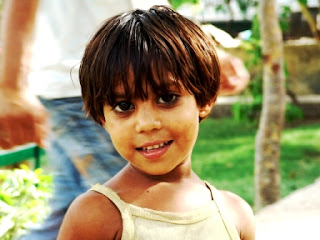
Also during my internship, I met this amazing little girl in Ghaziabad where we run an HIV/AIDS project called EMPHASIS for migrant workers from Nepal and Bangladesh. I’d just begun working on my photography and I’ll always keep this photograph as a reminder. I can’t get over how beautiful she is.
 June 2011, CARE offered me a consultant’s role which I accepted for 8 months till Jan ’12. My main responsibility is devising and launching a volunteer engagement programme for them. They’ve had nothing of the sort before so it’s more challenging and interesting which is why I took it up. I don’t know if I’ll continue after Jan but that’ll depend on a whole bunch of factors. Which brings me to my first edition of ‘Realisations of 2011' - The year so far.
Does growing up and knowing yourself better directly imply that your tolerance for people unlike you decreases? I could mask it as “I’m self aware and honest and don’t see the point of pretending otherwise.” But honestly, it scares the hell out of me because I’ve been a pretty tolerant person my entire life. I’ve never passed extreme judgements or let anyone affect me to the extent of wanting to avoid their company at any cost. But that seems to be changing because I’ve honestly had enough.
Before this turns into an angst-y post which I don’t intend it to be, I’ll get down to what’s been pending for a while. The many developments over the past few months. The neglected mental notes to blog about the revelations that each development invited.
Feb 2011 I started interning at CARE India, this amazing international humanitarian organisation that works for the empowerment of the poorest and most marginalised communities in India, with special focus on women and girls. The gender angle naturally appealed to me, as did the scale and scope for impact. The three month internship had me doing all sorts of content development, event management, social media management and communications work. I don’t think I intend on making a career out of development communication but it was the perfect place for me at this point to gain a bird’s eye view of work across verticals (health, education, livelihoods and emergency). The highlight of the 3 months was most definitely my field trip to West Bengal towards the end of my internship where I travelled through the interior districts and acquired insights into a vicious but preventable cycle of social problems. (Hopefully, I’ll write a longer post on that soon)
Also during my internship, I met this amazing little girl in Ghaziabad where we run an HIV/AIDS project called EMPHASIS for migrant workers from Nepal and Bangladesh. I’d just begun working on my photography and I’ll always keep this photograph as a reminder. I can’t get over how beautiful she is.

- The everlasting, havoc-inducing tug of war between development work and event management and travel journalism and fashion merchandising, has been resolved. I’m far too passionate about human/child rights and travelling to spend my life doing anything else. It comes down to being okay at something everyone’s doing as opposed to being excellent at the one thing you’re choosing to do (which I have tried to explain to my grandmother, to no avail).
- If I were the sort to have an idol, it could be Audrey Hepburn.
- What do you know! Social Work Does Pay *sarcasm aimed towards those who said I'd be a pauper for life*
- Relationships change. And sometimes there’s nothing at all you can do but watch it happen.
- I’m made for development work because towards the end of what could easily be the most eye opening, pity/sympathy inducing and possibly, upsetting days of someone’s life (my field visit) I was more motivated than ever to make a difference. I really believe it’s possible because there’s just SO much to be done. Like I’ve always maintained – there’s something magical about the nature of humankind’s unwavering faith. Seeing what people have achieved without resources makes you think of how much they can with.
- I need to watch movies. Regularly. If I don’t, I’m restless.
- Yoga isn’t overrated at all. It’s really that amazing. In fact, I fully intend on going to Mcleodgang and doing a 2 month yoga course some day. But for now, classes at home will suffice.
- If by next year I can’t narrow it down to a few universities and masters courses I’d like to apply for, and of course, figure out where the money for an education abroad is coming from (both very likely), I’ll apply for an overseas volunteer/internship/short-term job opportunity. Travel + Work Ex!
- The most unfortunate realisation of all – the transition from ex-girlfriend to friend is never as easy as the transition from friend to girlfriend. History remains, feelings linger. For every 10 days you’re a friend, there will be 2 when you’re the ex (purely feelings-wise). This is quite a blow for someone who has spent years believing that friendship with exes minus the baggage was possible.
- Sometimes - ignorance is bliss, it’s alright to be stubborn, it’s imperative to stand up for yourself and it’s therapeutic to let go.
Friday, June 17, 2011
Little Miss Sunshine
As what might seem as a reiteration of an earlier post, I must declare - it takes so little to light up your morning!
I was driving down my normal route to work, mindlessly untangling a chain of desultory thoughts and before I knew it, I was at a red light. A glimse in the mirror, a glance at the phone, the customary song switch and a knock on my window. A tiny little sweetheart in torn clothes. Too young to be up at this hour. Too young to be begging to stay alive. The image crushed me and made me realise how much there was too be done for little children like the one who stared at me then with dark, beuatiful, pleading eyes. For a reason I still can't fathom, I skipped the usual chatter I initiate with these kids and just handed over 10 rupees. My mind was blank and I couldn't think beyond her sad eyes. All I could muster was a promise from her that she'd buy herself something to eat with the money, and would make sure she attended the evening school in her area. She agreed, her face lit up and she skipped off to another car, while I was left wondering what her life was like. 30 seconds later, I could see her looking at me in my rear view mirror. She had the most adorable smile on her face as she waved at me and I reciprocated with an even bigger smile. Just as I was driving off, she pursed her lips, raised her tiny palm and blew me a flying kiss. It was just the sweetest little thing!
Who says strangers can't leave good memories? Sometimes they leave the best :)
I was driving down my normal route to work, mindlessly untangling a chain of desultory thoughts and before I knew it, I was at a red light. A glimse in the mirror, a glance at the phone, the customary song switch and a knock on my window. A tiny little sweetheart in torn clothes. Too young to be up at this hour. Too young to be begging to stay alive. The image crushed me and made me realise how much there was too be done for little children like the one who stared at me then with dark, beuatiful, pleading eyes. For a reason I still can't fathom, I skipped the usual chatter I initiate with these kids and just handed over 10 rupees. My mind was blank and I couldn't think beyond her sad eyes. All I could muster was a promise from her that she'd buy herself something to eat with the money, and would make sure she attended the evening school in her area. She agreed, her face lit up and she skipped off to another car, while I was left wondering what her life was like. 30 seconds later, I could see her looking at me in my rear view mirror. She had the most adorable smile on her face as she waved at me and I reciprocated with an even bigger smile. Just as I was driving off, she pursed her lips, raised her tiny palm and blew me a flying kiss. It was just the sweetest little thing!
Who says strangers can't leave good memories? Sometimes they leave the best :)
Wednesday, June 1, 2011
Engaging with Migrant Communities
My second article for the CARE India blog. It was preceded by a really interesting field trip to Shalimar Gardens, Ghaziabad, Uttar Pradesh (one of the project sites). I've been meaning to write about that visit for a while. But for now I just have time to copy, paste this -
Every year thousands of Nepalis and Bangladeshis migrate to India in search of employment and a better quality of life. Separation from spouses, families and familiar social and cultural norms, language barriers in the new environment, substandard living conditions and exploitative working conditions (including sexual violence) often result in isolation and stress leading migrants to engage in behaviours like unsafe casual or commercial sex, increasing their risk to HIV and AIDS. Moreover, due to inadequate access to HIV services and the fear of being stigmatized for seeking HIV-related information or support, the issue is largely ignored.
Asia constitutes 14.4% of the world’s people living with HIV/AIDS. While overall HIV prevalence is low in Bangladesh and Nepal, vulnerable mobile populations are increasingly forming a bridge from high prevalence areas of India back to Bangladesh and Nepal. To disrupt this vicious cycle, Enhancing Mobile Populations’ Access to HIV/AIDS Information and Services or EMPHASIS, a CARE project, uses the unique Community Life Competence Process (CLCP) approach which focuses on the strengths within a community as the primary step to tackle pertinent problems. The approach believes that “every community has the capacity to respond to life challenges, to build a common vision, to act and adapt.” Thus, through this approach, communities participate in the process of change rather than being mere recipients of the change. They are given a forum to voice their concerns and dreams, and over time they gain confidence in their own ability to recognize and overcome their problems. The approach seeps into the social fabric of the community ensuring sustainable impact that goes far beyond the project period.
Over the years, engagement with migrant communities has highlighted that though the problems and concerns of migrants coincide with those identified by EMPHASIS, there are many other deeper issues that need to be tackled beforehand. For example, migrant communities acknowledge health as an area of concern but it is a lower priority for them.

Deepak Chanda Rai, a young man from Mahendra Nagar village in western Nepal has been living in Shalimar Garden, Ghaziabad for 15 years. Highlighting his community’s concerns he says “We face a lot of discrimination. We are paid less than the normal salary because we are Nepali and we have no job security. Many times we are asked to produce ID cards stating that we live and work in India but there is no authority to help us attain this ID card so we are beaten mercilessly by people who think we are thieves. We can’t even purchase SIM cards without an ID card.”

Narendra Bhandari, another Nepali who has lived in many cities across India adds, “Nepali’s are denied basic human rights in India even though we have been working here for generations. Our children can not go to school because they do no have a birth certificate. Their health is neglected because we don’t have access to any facilities. All 5000 men in my community are guards who have to work 24 hours without a break. Our responsibilities are not defined; we are made to do extra work which interferes with our duties and if something goes wrong we are always blamed and punished. Now finally, with CARE’s help we are emerging as one community and have begun to think about solving our own problems.”
Wednesday, May 18, 2011
What's the story, Morning Glory?
“Socialization is the process of learning to be a member of a society, accomplished through interaction with others and participation in the daily routines of everyday cultural life.”
Primary socialization as they call it, begins at a young age through primary agents ie, la familia. My family may have got many things right, but mornings? That’s something they just don’t get. What’s that thing about mornings being a fresh start? Whatever it is, it does not apply to my house. Don’t get me wrong. I’m simply saying that there is never a good enough reason to wake up to screaming, chaos and unnecessary accusations early in the morning. Maybe, if you’re in a war stricken city that is being bombarded left, right and centre? No, not even then. That’s probably when you need all the good mornings you can get to brave through the rest of the day.
Mornings set your mood, and I admit I tend to be moody more often that not and so, mornings become all the more important. The amount of energy I put into reversing the ill effects of my average morning can be put to much better use, like actually fixing the issues pertaining to afore mentioned screaming. But instead I retaliate or cry or pretend to ignore everything and everyone, depending on my mood. But worse of all, on days that I do wake up before this natural alarm, I cower in fear of the inevitable. Now, fear is not something you want to start your day with. EVER. That’s just sort of ridiculous.
Which is why, I know that if and when I ever have a family of my own, mornings will be very, very, extra important. It’s one of the many lessons I’ve learnt growing up.
Some of my best ways of dealing with a bad morning have proven pretty effective. They include –
1. Self Pampering. Anything from a manicure and pedicure to hair spa or massages. Spend the rest of the day looking forward to a good evening as opposed to a bad morning.
2. Shopping. Let’s face it, it cures almost everything imaginable.
3. Bring it On Soundtrack. Never underestimate the power of ‘Hey Mickey’, ‘As if’ and ‘You’re just what I need’. Instant mood lift.
4. Dance. Morning? What morning?
5. Animals. They have actual magical healing powers.
6. Vent. Let’s just say my best friend hears an earful on days that the other techniques fail.
On days that I don’t employ any mood reversal methods, I sulk or worse, fill my mind with angry, negative thoughts. I project negative vibes. There are very few things I hate more than negative vibes.
Moral of the story? If you have control over your own and other people’s morning, do what’s in your power to make it a good one. You don’t know what the rest of the day holds, but as the proverb goes “A good beginning makes a good end.”
Or even a tolerable end, and sometimes that's all you need.
Or even a tolerable end, and sometimes that's all you need.
Thursday, April 28, 2011
Under the same (blistering) sun? Apparently not...
My first blog post for CARE India, where I've been working as a communications intern for a little over 2 months now.
The Earth Day Network is mobilizing a “Billion Acts of Green” to mark this year’s Earth Day in hopes of increasing consciousness about the importance of sustainable practices. It is the largest environmental service and advocacy campaign in the world and has already registered more than a 100 billion acts by individuals, corporations and organisations. But even as this movement musters commitments from large segments of society, one particular segment; a more invisible and seemingly powerless one, struggles to grapple with the realities of climate change.
Increasingly, climate change discussions are gravitating towards the larger issue of gender disparity, and with good reason. Women and children in poor communities have been recognised as the most vulnerable groups as they lack the resources to manage the consequences of the impending climate crisis. Women face other historic disadvantages including limited access to decision making and economic assets which make matters worse. Their lack of theoretical knowledge about climate change does little to negate the inevitable and extensive adversities that follow.
For centuries, rural women in India have had the responsibility of providing water and food to their family. This culturally propagated role has played an important part in perpetuating gender inequality. In the face of severe water scarcity, the daily grind of getting water and keeping home fires burning has become an even more fatiguing task for rural women everywhere. Moreover, it has pulled children, especially girls, out of schools. The Human Development Report (HDR) of 2007-08 revealed that Indian women born during floods in the 1970s were 19% less likely to have attended primary school. Aside from this, climate change has resulted in serious health crises of various kinds in regions where health care delivery is almost non-existent. This is where CARE and its ongoing interventions come in.
Even with extensive global emissions reductions, CARE knows that the impacts of climate change will be felt by poor communities for many years to come. The World Food Programme estimates that globally, climate change will be responsible for an increase of 10-20% of people at risk of hunger by 2050. Of these, almost all people at risk of climate-related hunger will be in developing countries and the majority of the world’s hungry and undernourished people will continue to be women and children.
CARE believes that though rural women are susceptible, they are certainly not defenceless or powerless. On the contrary, women have shown great determination and strength while facing the challenges of climate change. They have helped not only their families but entire communities cope better with lifestyle and occupational changes by proactively adopting alternative practices. One way CARE helps women adapt to climate change is by working with them to diversify their livelihoods, especially when farming alone can no longer support their families.
Around the world, women are joining together as agents of change in their communities and CARE interventions have proven to be instrumental in facilitating this movement or change.
The Earth Day Network is mobilizing a “Billion Acts of Green” to mark this year’s Earth Day in hopes of increasing consciousness about the importance of sustainable practices. It is the largest environmental service and advocacy campaign in the world and has already registered more than a 100 billion acts by individuals, corporations and organisations. But even as this movement musters commitments from large segments of society, one particular segment; a more invisible and seemingly powerless one, struggles to grapple with the realities of climate change.
Increasingly, climate change discussions are gravitating towards the larger issue of gender disparity, and with good reason. Women and children in poor communities have been recognised as the most vulnerable groups as they lack the resources to manage the consequences of the impending climate crisis. Women face other historic disadvantages including limited access to decision making and economic assets which make matters worse. Their lack of theoretical knowledge about climate change does little to negate the inevitable and extensive adversities that follow.
For centuries, rural women in India have had the responsibility of providing water and food to their family. This culturally propagated role has played an important part in perpetuating gender inequality. In the face of severe water scarcity, the daily grind of getting water and keeping home fires burning has become an even more fatiguing task for rural women everywhere. Moreover, it has pulled children, especially girls, out of schools. The Human Development Report (HDR) of 2007-08 revealed that Indian women born during floods in the 1970s were 19% less likely to have attended primary school. Aside from this, climate change has resulted in serious health crises of various kinds in regions where health care delivery is almost non-existent. This is where CARE and its ongoing interventions come in.
Even with extensive global emissions reductions, CARE knows that the impacts of climate change will be felt by poor communities for many years to come. The World Food Programme estimates that globally, climate change will be responsible for an increase of 10-20% of people at risk of hunger by 2050. Of these, almost all people at risk of climate-related hunger will be in developing countries and the majority of the world’s hungry and undernourished people will continue to be women and children.
CARE believes that though rural women are susceptible, they are certainly not defenceless or powerless. On the contrary, women have shown great determination and strength while facing the challenges of climate change. They have helped not only their families but entire communities cope better with lifestyle and occupational changes by proactively adopting alternative practices. One way CARE helps women adapt to climate change is by working with them to diversify their livelihoods, especially when farming alone can no longer support their families.
Around the world, women are joining together as agents of change in their communities and CARE interventions have proven to be instrumental in facilitating this movement or change.
Subscribe to:
Comments (Atom)